Healthy Communities
Cook County is committed to improving the health and well-being of all residents by addressing the social determinants of health – external factors that can impact residents’ health, such as housing instability, food insecurity, access to transportation and the physical environment. Through collaboration and partnership with government agencies, community-based organizations and healthcare providers, the County aims to reduce residents’ barriers to accessing health services and advance policies and programs that encourage healthy, active living and overall well-being.
Healthy Communities Policy Pillar initiatives are led by Cook County Health (CCH), in collaboration with Cook County Department of Public Health (CCDPH), Office of the President (OOP), Justice Advisory Council (JAC) and other partners.
Goal: Improve the physical, mental, and social well-being of Cook County residents and communities.
Objective 1:
Reduce health inequities by addressing the racial disparities and the social, physical and economic conditions that impact health.
Spotlight:
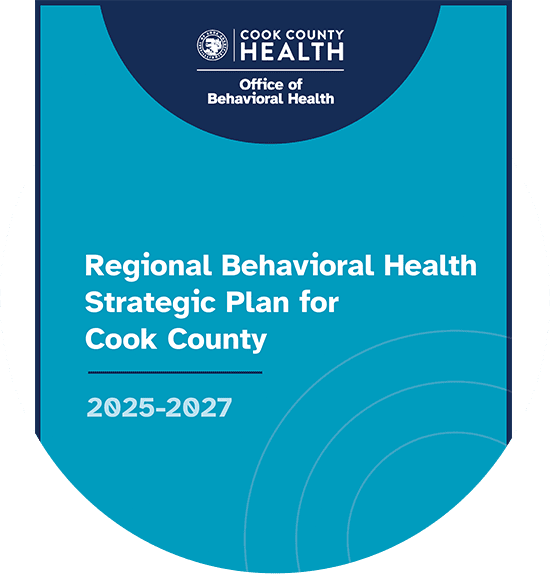
Regional Behavioral Health Strategic Plan for Cook County
Description:
Description: The Regional Behavioral Health Strategic Plan, released in May 2025, is Cook County’s firstever blueprint for improving behavioral health and behavioral healthcare for all County residents. The
plan has a particular focus on addressing behavioral health needs in disinvested communities and was
developed in collaboration with hundreds of community partners.
2025 Progress:
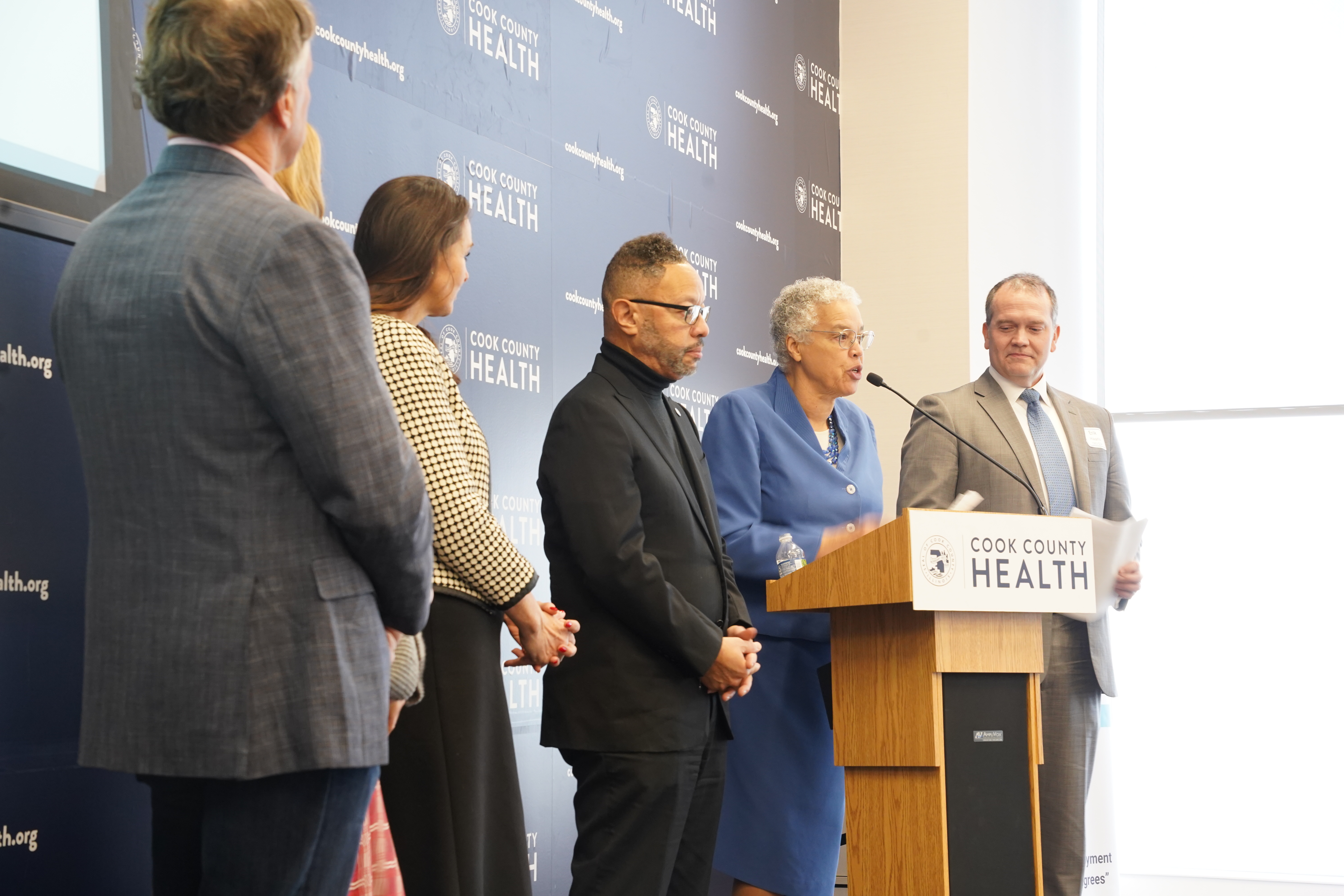
• Established eleven Regional Behavioral Health Collaboratives to guide the implementation of the
strategic priorities and enhance collaboration and coordination
• Expanded front door access to mental health services through the National Alliance on Mental Illness
(NAMI) Helpline
• Conducted over 1,000 referrals through calls, texts and chats each month, connecting individuals to
local mental health resources
• Increased referral volume by 76% from early to mid-2025
• Launched Behavioral Health Apprenticeship and Retention Hub to aid in attracting and retaining talent for the behavioral health workforce
• Received a 2025 NACo Achievement Award
Objective 2:
Improve access to and integration of high-quality, responsive healthcare.
Spotlight:
Description:
CountyCare is the largest Medicaid managed care plan in Cook County, covering nearly 400,000
residents. Owned and operated by Cook County Health, CountyCare offers medical, dental and vision
coverage, prescriptions and other health care benefits at no cost to its members.
2025 Progress:
• Improved access to quality healthcare regardless of income as the only provider-led, public Medicaid
health plan in Illinois
• Successfully advocated for the auto-assignment of health benefits for immigrant adults and seniors
• Launched lead poisoning prevention campaign, resulting in 89,000 families with children under age 12 on Medicaid receiving educational materials and water pitcher coupons
• Received a four-star rating from the National Committee for Quality Assurance (NCQA), making CountyCare the highest-ranked Medicaid plan in Illinois

Objective 3:
Support healthy and active lifestyles and communities for residents.
Spotlight:
Cook County Good Food Purchasing Program (GFPP)
Description:
GFPP is a comprehensive procurement strategy that directs Cook County’s food purchasing towards five values: local economies, environmental sustainability, valued workforce, animal welfare and community health and nutrition.
2025 Progress:
• Integrated GFPP-aligned specifications into new bids for poultry, dairy, frozen foods and meat contracts
• Invested $80,000 in new equipment for Cook County Juvenile Temporary Detention Center (JTDC) kitchen staff to support updated menu featuring more from scratch, fresh, local and healthy food options
• Received a 2025 NACo Achievement Award
Objective 4:
Implement a public health approach that emphasizes trauma-informed strategies for mental and behavioral health, substance use, and community safety.
Spotlight:
Harm Reduction Services
Description:
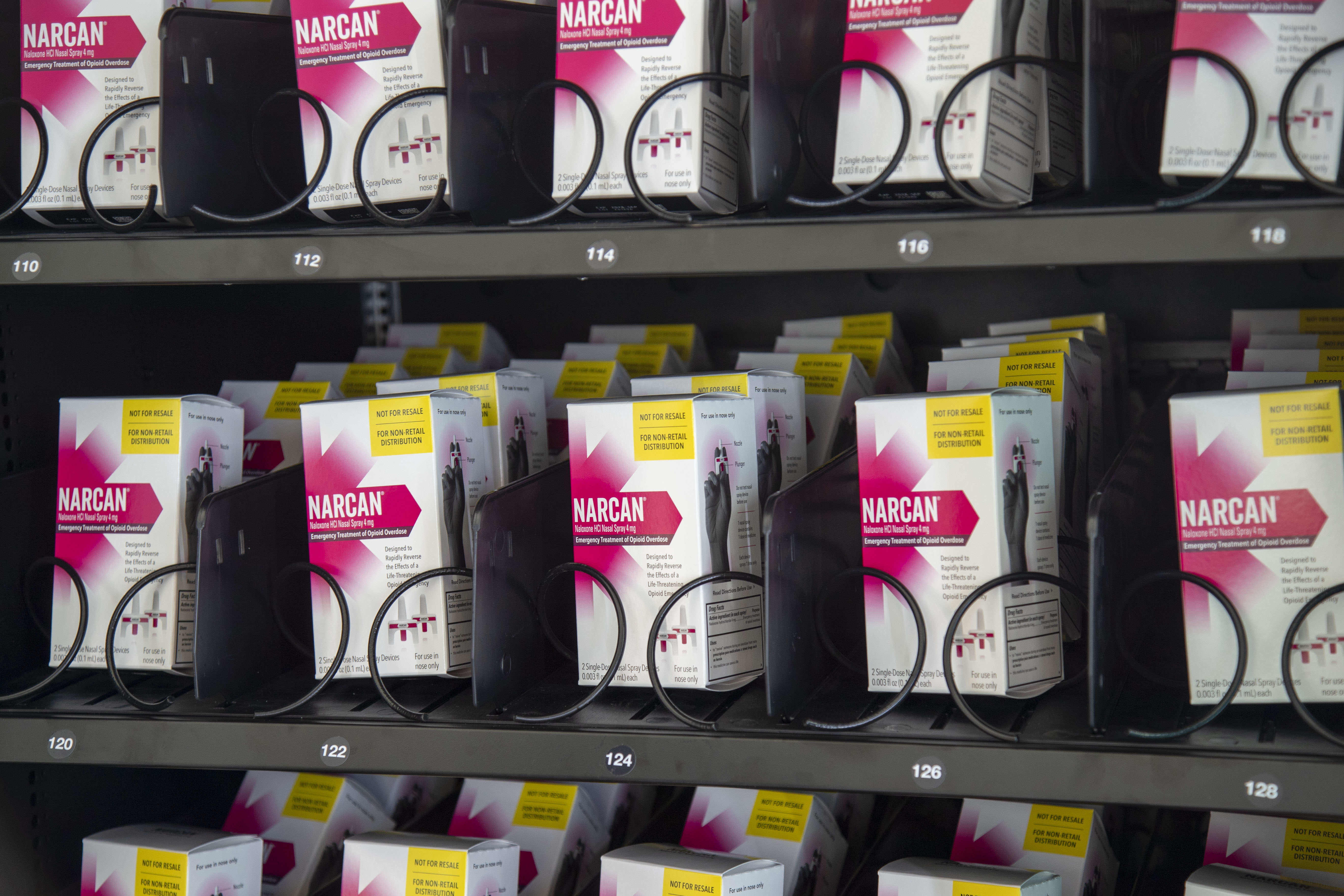
CCDPH has increased harm reduction services for substance use through a myriad of trauma-informed strategies, including expanding access to naloxone through community boxes and vending machines, outreach and education in priority communities and a community-based drug checking program.
2025 Progress:
• Distributed 18,790 naloxone kits and 237 boxes of fentanyl testing strips
• Trained 7,444 individuals on harm reduction services
• Distributed publicly available naloxone boxes at more than 40 local businesses, community organizations, libraries and community colleges
• Generated 38.5 million impressions through the Get Naloxone ad campaign
Table of Contents
- Executive Summary
- Letter from the President
- Healthy Communities
- Vital Communities
- Safe and Thriving Communities
- Connected Communities
- Sustainable Communities
- Open Communities
- Equity Fund Addendum
- Equity Fund Financial Reporting